Sunday, January 15, 2012

Organizing Our Homes

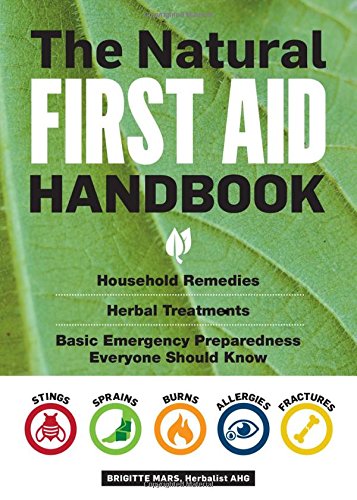
This week I've been reading a book on organizing small spaces by Kathryn Bechen, titled Small Space Organizing.  I posted a quote from the book a week or two ago.  The introduction drew me in.  My mom picked it up the day it arrived and read several chapters.  My sister in law read the entire book while she was here visiting and enjoyed it.  It was very easy to read.  One key thing about books on organization, I think, is that they are intended to give you ideas.  How we organize our homes and what we keep in them is very personal.  This audience for this book is middle/upper middle class women who have disposable income that allows them a lot of freedom in their choice of furnishings and the ability to purchase storage containers.  Are there ideas for women with more limited financial means?  Yes, but this book is for people who choose small spaces and can afford to furnish them to their tastes more than for people who choose small spaces because that is the most they can afford.


Her ideas in the introduction, though, and the idea that we should strive to "dwell well" are ones that I think all women would be encouraged to hear.  If you live in an area that puts a lot of value on where people live and the homes they live in (and judge others by this criteria), then this chapter is worth reading and taking to heart.   


From there, Ms. Bechen covers topics such as the one room dwelling, the nursery, kids' rooms, and all other rooms of the home one by one.  I enjoyed her ideas for a one room dwelling.  My mom particularly enjoyed this chapter and took several ideas from it as she has settled into her room in our new home.  I think she is pleased with the outcome though it's not entirely done yet.  


I was especially curious about her chapter about the nursery and kids' rooms.  She says at the beginning of the chapter that she and her husband don't have children.  I have found your perspective on many things like this changes drastically when you have children yourself (even if you've been a teacher beforehand as both this author and I were).  Many of her suggestions were great ones that I would definitely give people in light of my experience living with children in 4 different homes.  But, many of the things she considers needs and what you "should" spend money on are ultimately optional.  You only really need a crib, a place to change the baby, and some storage.  In your living room or the nursery it is helpful to have a spot you are comfortable nursing or feeding a bottle in, but if your nursery is small, there may not be room.  We didn't have a changing table for our first two or a diaper pail.  I put a pad on the floor and changed my babies there--and never had to worry about them falling off.  Oh, and I've never seen a crib that was high enough to store boxes of diapers under.  But, for a mom who's able to design her nursery, these suggestions would be a great place to start.  We were just coming from a very different place financially when we had our first daughter.  (God did provide very graciously for us and I am very thankful that we had what we needed.)  


Her ideas for kids' rooms are very much in line with what we see families have on television.  For the most part, they're pretty good general suggestions.  I suspect they'll align with what most families have found on their own to be workable ideas.  All my friends will understand when I note, though, that I disagreed that kids rooms should be wired with extra outlets so that they can support more technology and media in their rooms.  Um.  Nope.  At least not in our house.  In my mind, computers are best out in the open where they can be seen.  Televisions in a child's room?  My opinion is that they're really not a good idea.  I've heard too many stories of children waking in the night or not going to bed until very late because they stay up watching television in their rooms.  I remember one story of a parent being so proud that her 3 year old stayed in her room for 3 hours watching Shrek.  I wouldn't mind my children spending 3 hours in their room--if they're playing or reading or napping.  


So, was this book useful to me?  Perhaps not to me, but it was enjoyable to my family members and it is well written.  We just moved into a new home a month ago and I have had to buy about 10 large Rubbermaid bins for storage in the basement.  I opted for the sharpie marker labeling technique instead of a label maker as Ms. Bechen suggests.  I know people love label makers, but it hasn't been a need for us.  It's a want.  We came in with all sorts of ideas of what we'd need to buy and spend money on for storage.  We did buy 4 dressers, a small wardrobe, a bed frame, and 2 night stands for our room--all from IKEA and a new larger dining room table and chairs that we are waiting on.  But, aside from that, we are using what we had before.  We had other ideas, but those have been put on my garage saling list for the spring.  That's the one aspect that she doesn't directly address--organizing frugally or on a limited budget.  


If you enjoy reading books about organizing spaces or are looking for some encouragement to pare down and simplify, this book will definitely tell you that.  She doesn't give specific directions of what to get rid of and what to keep in many ways or a lot of directions of how to do it, but she throws in a few comments about it here and there.  This book is primarily a book aimed at helping you see the big picture of how you want your home to look and how you're going to use the space in it.  What you keep and get rid of is up to you.  It will give you ideas and start you on the path.  And it will give you a lot of encouragement to keep going and press on as you organize your home and find contentment in the space in which you dwell!


Please note that I received a complimentary copy of this book for review from Revell Publishing.

Planning Our Projects

I had this thought yesterday about my home and how burdened I've felt to fix everything right now.  It came after I looked through some old pictures of my family in our old house--before we'd fixed it.  I had forgotten what it looked like and we simply lived with until we had the finances to fix it.  In one instance we were compelled to take a loan out because it was such an enormous repair that had to be done right away.  But, we worked away at it to quickly pay that loan off.  What I realized as all of these memories came to me is that part of the reason we feel this burden to fix everything is that we are able to afford a lot of the fixes.  They aren't big fixes like the one we had to take a loan our for several years ago, though they do add up.  But, when we simply couldn't afford the fixes at the time, we had to wait until we could.


The second part of the reason we feel so burdened is a little different for my husband and I.  For him, he thought he was moving into a house that didn't need a lot of work, so it feels a bit like we got hijacked.  For me, I realize that my family does better when our home is settled and functioning--and not out of order.  So, I want things to be fixed and in place.  


So, last night we were feeling so burdened, we sat down and made a master list of those projects we want to do over the next year.  We broke it down for the winter (now-next 2 months), spring, and June-December.  We also made a list of projects for next year.  When we spread out the projects over time, it didn't look so bad.  I also made a list of the little projects I need to get done now and need to work through.  I took my calendar and spread the projects and phone calls out over the week.  My goal is to only tackle one day's jobs at a time, so that I can still get my regular work done and feel at ease that it is all going to get done.  


Now to stick to that plan...

Sunday, January 8, 2012

What we need and what we don't

It's hard to believe that it's been almost 1 month since we moved.  My oldest daughter has been asking all week to go back to our old house.  She keeps telling me that our house doesn't feel like "home".  Her biggest reason when I ask is because we're so busy.  She's right.  We've been working a lot on our house and I've honestly had less patience to sit with them.  My mom's made up for it, but really, she's not me.  I'm their mom.  So, as I was going to bed last night I realized this.  I need to fully do my job again.  I made a goal to work harder at doing things little by little rather than all at once.


Goal #1:  Bag 1 bag of leaves in the yard a day.  The former owner of this house had her yard mowed, but didn't do anything else.  There were sticks buried in the yard because they were never picked up.  It's overwhelming to me, but I need to just bag bit by bit.  It will eventually all get done, right?  Yup.  It will.


Besides feeling like we have to do the work at once this house has made us feel like it needs to be fixed all at once.  Sometimes that's been because it really needs to be, but sometimes it's been because of our own anxiety. This is why I titled this entry "what we need and what we don't".  


I don't need to rake the leaves all at once, but I feel like I do!  What I really need to do is not burn myself or my kids out but working too much all at once and not having time for them.


Our fireplace is the case of something we felt needed to be fixed right away because it didn't work properly, but really we made a mistake.  We didn't step back and think about the wisest way economically to fix it.  I'm thankful the Lord threw in a snag on Friday to help us see a better fix.  On Friday, as I've come to expect, the fireplace log set installer told me he couldn't do it.  He explained 2 snags to me.  1) the damper had to stay open 24/7 (which we didn't know) and we had no doors to keep our house from losing heat constantly up our chimney and 2) we had no screen or doors in front of the fireplace.  Ugh.


We were very upset because we can't get all of the money back that we spent on the log set--but we can get most of it.  We realized that we would rather put a grate for wood in the fireplace with a screen in front of the fireplace and on the side.  We've called someone to come disconnect the gas line that runs up into the fireplace this week.  In the end, we will lose a little money, but we'll also save a lot of money and feel better about the whole thing.


We thought we needed a gas insert, but really we don't.  We could have saved ourselves the loss and the weeks of waiting for something to be fixed that didn't end up being fixed.


Many people buy new houses and so everything is fixed to begin with.  But, when you buy an older home, there's many things that need to be fixed right from the beginning.  The hard, but important, part is to fix them as you go and figure out what really needs to be fixed when.  That's what we're working on... 

Tuesday, January 3, 2012

Small Houses, Big Houses

Two weeks ago, a book arrived for me to review.  My mom picked it up that very day and began thumbing through it.  She enjoyed it right off the bat.  This weekend my sister in law was here visiting and she read the whole book.  So, I picked it up yesterday.  My full review of the book will be posted in a few weeks, but several of the quotes were very relevant to what we've been going through.  


Our new, old home has had a lot of issues.  We've been working hard on fixing them and getting it in shape.  There have been so many things that have run through my mind as I've been working on them.  One of the things I've pondered is that I need to seek daily to be content with my home and in my home.  


The book I'm reading put it this way:  that we should seek to "dwell well".  The author talked of how large houses cost people--personally, economically,professionally.  Houses can restrict people, rather than free them.  


So, here's a quote by Kathryn Bechen to consider:
"Small spaces give us the opportunity to live sincerely, forcing us to choose which of our possessions make our hearts sing."  
from pg. 15 of her book Small Space Organizing

Last week, when I was at a friend's house discussing houses and possessions, the idea was brought up and discussed that the more possessions one has a) the more one has to take care of and clean and b) that more choices lead to greater unhappiness.  If we only have 1 platter, then we use the 1 platter and are thankful.  If we have 3, we want to make sure we choose the right one and spend more time making that choice.  I use the platter example because up until last week, I had no platters.  My mom was sifting through her things and figuring out what we should keep.  We decided to keep 2 oval platters and 2 round trays that she had.  On Saturday, one of our guests brought some food and asked for a platter to put it on.  I brought the larger one out and our friend wasn't sure it was big enough.  After a moment, it was decided that it would work after all and it looked great with food on it!  For me, that platter was the only choice I had.  I was thankful to have it!  I knew that the person's request wasn't unreasonable at all, but that she must have several platters and be used to having them available to use.  We were coming from different perspectives and have different things in our homes.  


But, that tiny moment brought to my mind what happens when we have choices.  I want get a new camera case that will make it easier for me to carry my camera and lenses.  The internet has a myriad of choices.  I want to make sure I make the "right" choice--or else what?  Well, the fear is that I'll be unhappy with it.  


Having a home that is just right for our families and even perhaps, smaller than we'd like compels us to not hold too tightly to our possessions.  There simply isn't enough room to keep a lot of extra stuff.  But, sometimes it can go the other way.  I've seen how only having a few possessions has made me become overly concerned with making the "right" choice of possessions instead of letting go of those possessions.  Something that someone gives another may not be received because it wasn't exactly what was wanted.  I don't want to get caught in that trap either.  Having possessions comes with many traps and we have to be careful not to make them our homes into idols.  


What really matters?  Our houses?  No.  Our stuff?  No.  Rather, we should desire to dwell well--to seek to love others well with our home and in our home.  Ideally, I think it should be a comfortable place to all who come and go.  


I think I have some more purging ahead of me this week as I finish storing my homeschool books in our basement...  and some more time to think about what I really keep.

Wednesday, December 28, 2011

Feeding a Crowd

I love the holidays.  I love having people over for meals.  I love to share that time with others.  But, I was reminded yesterday in two conversations of times when I had to be extremely tight with our food budget.  It was very difficult to have people over at those times because I worried about having enough food and the cost.  It wasn't because I didn't want to have them over or because I didn't want to be generous--it was just hard for me.    


I found that there were a few meals that I served regularly and another way that I found I could be generous with my time and skills (which I had) rather than financially (which I didn't have).  


The meal I began making was a Meatball Soup from the More With Less Cookbook.  The premise of that cookbook is to make "more" with "less" of the world's food resources.  Most of the recipes are very inexpensive to make and flavorful.  


Here's my version of their meatball soup:


Combine 4-5 cups cubed potatoes (peel on)
1 lg or 2 small onions cut in quarters
1/4-1/2 tsp. ground allspice
1/4 cup chopped fresh parsley or 1-2 Tbsp. dried
2-3 carrots peeled and chopped or sliced
4 cups water
2 tsp. salt
1/8 tsp. pepper
Bring to a boil, then add meatballs (see below).


I make the meatballs while the soup is coming to a boil because they're quick and easy to make.


In a mixing bowl, combine 
1 lb. ground beef
1 cup bread crumbs
1 cup milk
1 tsp. salt
1/8 tsp. pepper.  
Form into small meatballs and set aside.


Cover and Cook for 25-30 minutes in a pan at a simmer or low boil.  
Add 1 cup milk and 4 tsp. (1 Tbsp. + 1 tsp.) white vinegar.
Skim fat off top--the higher fat content of the ground beef, the more fat there will be.  The last time I made this with 90% lean ground beef, I didn't need to skim off any fat.  


I will warn you that this soup has a strange smell (the vinegar) when it's leftovers.  But, then you heat it up, and eat with a piece of bread and it always tastes wonderful.


The other meal I make is tacos with refried beans.  I posted the refried bean recipe a while back and you can find it here:  http://makingthingsstretch.blogspot.com/2010/02/refried-beans-and-bean-flautas.html
Refried bean tacos and flautas are both inexpensive dishes.


One of the other ideas I discovered was to have people over for dessert and games rather than for dinner.  It is much less expensive to make part of the meal than the whole meal.  I also learned to take people up on their offers (and to offer myself) to bring a dish when having company or being company.  


I once ran into a lady at BJs who was lamenting having visitors come see them.  The reason?  Everyone who came to visit wanted to have crabs, which is a meal you order out to take home and eat rather than eating in--so the cost falls to the host more often than it is split with the guests.  Her guests had no idea how much crabs cost or what they were asking (when they came with large grown children who had big appetites) and she didn't to be rude or seem stingy.  I have found a way around this one and a way to get less expensive crabs, but I am very aware of what an expensive meal it can be to have crabs with guests.  It can be hard.


The way I found that I could help with meals at church, please forgive me if I've written this before, is to join with somebody to share making the meal.  We lived far away from most people in our church until recently so it was difficult to deliver food on a weekday.  So, I would make a batch of homemade rolls, some cookies, and some muffins (all of which could be frozen by the recipient) for when they needed them.  More than the cost of the food, I was giving my time.  Typically, I also make snickerdoodles.  They are quite yummy and less expensive than other cookies to make.  I recently discovered another positive aspect of them--they are food allergy friendly since they do not have chocolate (can trigger migraines and other things) and peanut butter (the most common food allergy I hear about).  


I love having people over and if you are my friends and I invite you over--please come!  I hope that you read this blog post and understand that this is something I've sorted out with the Lord.  I am thankful that I can be more generous right now in what I fix for company, but I am ever mindful of being wise with the resources we have so that we can be generous with them more frequently rather than infrequently.

Thursday, December 22, 2011

Looking for an Area Rug

Area rugs are wonderful things.  They can help cover up spots instead of recarpeting an entire room.  We knew that one of the rooms in our new home had a lot of spots on the carpet.  But, we did not realize what bad shape it was in until we began preparing to move in!  I only took a picture of the piano because the carpet looked so bad I don't think I wanted to remember it down the road.  I cleaned the carpet and was able to get out a lot of the stains, but quite a few large stains remained.  I also did spot treat the stains with Resolve and scrub with a strong scrubbing brush before I used the carpet cleaner on it.  That helped a lot.  My husband and I realized that the room desperately needed an area rug.


To carpet a room can be quite expensive.  I estimated that this room would cost about $600.  But, you also have the hastle of moving everything out of the room and scheduling the installation.  In our case, we didn't even consider that because of all the other home repair projects we have to take care of right now.  So, we started looking for a rug.


We looked at Home Depot, Costco, BJs, Ollie's (a local store similar to Big Lots or Pic 'n Save), IKEA, Lowe's, and Target.  The rugs varied a lot.  The price range for an 8 x 10 rug was $100-$500.  I was very surprised at what I found.


One of the most surprising things was that many of the "rugs" at IKEA were really unbound pieces of carpet.  I thought $200 for a large piece of unbound carpet was quite high.  We did purchase a 5' x 7' blue rug from IKEA.  We tried it out in several rooms of our home, but then returned it.  We had a similar IKEA rug a few years ago, but the quality of the rug had been higher.  You could clearly see the white backing through the blue threads.  For $70, it was not a very good value.


Another thing that surprised me was the clear difference in quality as correlated to cost.  The rugs at Ollie's would be great floor coverings for rooms that you simply needed something on the floor.  Some of them were softer and thicker than others.  They were as nice as the IKEA rugs, but half the price.


Target had a nice selection of rugs.  They felt nice and had some great patterns.  They carried some 5' x 7' rugs in the store, but only 1 or 2  8' x 10' rugs.  They have many on their website, though.  The price range for rugs was similar at Home Depot, Lowe's, and at Target.  We found 8' x 10' rugs that varied between $225 (for very thin) to $400 for a much thicker rug.  Home Depot and Lowe's both had some 8' x 10' rugs in stock.  Target had 1.  That was a factor for us.  Christmas is almost here and we wanted our den to look presentable (the spots were that bad).


We settled on a rug from Lowe's.  The price listed at the aisle was $278.  It rang up for $288, but they will give it to you for the price listed if you ask.  I also had a 10% off coupon which brought the price down to $251.  We brought the rug home and it fit perfectly in the room.  We had wanted a rug that would hide the dirt and work with the couch and other furniture in the room.  I am so thankful that the rug has done just that!  


As for the design and color of the rug...  One of our friends explained to us that Persian style rugs are great for hiding dirt and spots.  I can see why!  I had never thought of them that way.  We chose this rug because we thought the color of it would also hide dirt well.  In the first day on our floor, it always has.  The carpet in this room is a magnet for dirt and leaves!  In this room, we have a red couch, tan walls, beige carpet underneath, our television console, and our homeschooling supplies and furniture.  I wanted a rug that would complement the red couch, but not seem too dark for the room.  The first picture shows how dark the paneling was before I painted it last week.  We wanted to keep the lightness of the room that the painting brought to it.  This rug has done a great job doing just that.  I chose a rug with a little red in it with colors that complemented the couch, but mostly contrasted with the red.


The other aspect of the rug I considered was the pile.  We have a dog and 3 children.  I didn't want a loop rug that was going to get easily snagged by Molly's nails.  I had a friend who carpeted her house in berber and then had to recarpet the whole house within a year because of how hard her 2 dogs were on the carpet.  Ever since I heard that story, I always try to think about what we're going to do on the carpet (sit, stand, walk) and who's going to be on it (pets and people)!  


So, that's our rug.  After all our shopping, it feels good to look at it and know how much of a difference it has made to how the room feels!  

Monday, December 19, 2011

Chopping Boards and Butcher Blocks

Moving into a new house has had a lot of lessons for me and a lot of things to fix!


I realized very quickly that the previous owner made a lot of improvements to the house, but she didn't complete them all the way.  She covered up the finishing touches that needed to be taken care of.  


Yesterday, I started to take care of one of them.  In our new kitchen, there is a kitchen island.  It isn't a butcher block.  Butcher Blocks are made out of hardwood.  I don't believe this is hardwood.  But, whether it is an island with a butcher block or wood counter top, it needs to be taken care of.


There are 2 options for cooking surfaces.  One is to apply mineral oil to it.  You can get mineral oil at any pharmacy, Target, or Walmart.  You would sand down the surface lightly with 220 grit and then apply a coat of mineral oil with a rag by rubbing it in.  


The other option is raw Linseed oil or Tung Oil.  You can purchase Butcher Block oil at Home Depot, for about $10-$15 for a quart can.  IKEA has their own product called Behandla which is made of "Tung oil, linseed oil, methylcellulose, lead free drying agent, plant-based emulsifier, water".  It is only $5/can.  I've used it for the past 3 years with our wooden countertops and feel comfortable with it.  


For the kitchen island in our new kitchen, I sanded it down lightly with 220 grit sand paper and then applied Behandla finish from IKEA to it.  I used a disposable 1" brush and then wiped down the excess with a paper towel when I was done.  The liquid is flammable, so I don't use cloth rags with it.  When you use Behandla, you have to put several coats on it to begin with, but then afterwards apply a coat about every 6 months (or at least that's what I do).  


If you don't put some kind of finish on your wooden chopping blocks or butcher block, they will split.  


As for disinfecting wooden surfaces, they have natural germ repelling properties, but I spread a little plain white vinegar on the surface and wipe it all over with a rag to disinfect.  This also works for plastic cutting boards.  I don't like bleach and having it around kids, so white vinegar is a much safer option.


At camp, we labeled our vegetable and meat cutting boards so that they wouldn't get mixed up.  It's good to be careful.  I don't worry about this at home, but I am careful to never use a plastic cutting board that I've cut meat on until it's gone through the dishwasher.  


About 8 years ago, I had a friend who's baby got sick with salmonella when she was 3 weeks old.  The family never figured out how she got it.  When I mentioned it to friends, everyone would automatically assume that they weren't very clean.  That wasn't the case at all!  The mom's kitchen was very clean and well taken care of. Watching their daughter get so sick made a big impression on me.  Now, I'm very careful to wash my hands frequently while cooking when handling meat or eggs.  I don't want to accidentally get my family or friends sick.  So, I'm careful to clean my hands and with cooking surfaces.  


Wooden countertops and cutting boards are beautiful and I love them.  But, I try to take good care of them!